
Search Habersham County Court Records
Habersham County court records do not have one simple free public search box. The Clerk of Superior Court links a Case Search option to Icon Case Management, but the public page shows a login requirement instead of open party-name fields. Georgia Courts also lists Habersham State Court and Habersham Superior Court through PeachCourt on the statewide e-access page, with account-based provider access. That means a person looking for a Superior, State, or Juvenile Court file should start with the Clerk, then use the official online channels only when the case type and access method fit.
The first task is to identify the court. Superior Court handles felonies, divorce, equity, land title, and broad civil cases. State Court handles county-wide misdemeanors and traffic. Probate Court handles estates, guardianships, marriage licenses, and weapons carry licenses. Magistrate Court handles smaller civil claims, dispossessory cases, distress warrants, county ordinances, and warrant or first-appearance functions. Municipal courts handle city-limit traffic, ordinance, and some state-law violations.
The official Habersham County homepage is one starting point for county departments, courts, sheriff resources, online payments, open records, and public service links.
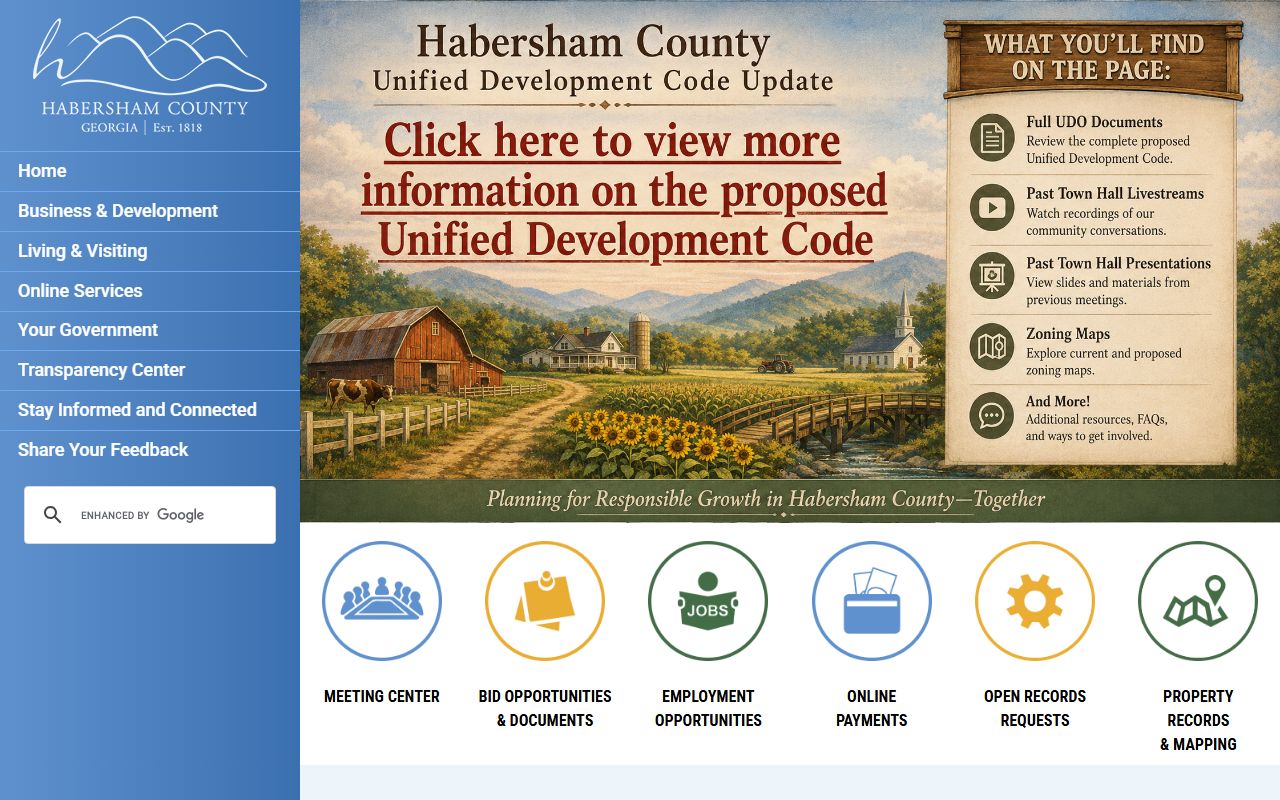
Use county department links to confirm which local office handles the specific Habersham County court record before opening a portal.
- Choose the court that created the record before opening any portal.
- For Superior, State, or Juvenile records, start with the Clerk of Superior Court or the Georgia Courts e-access page.
- Use Mountain Judicial Circuit calendars for public Superior Court calendar information.
- For land records, use the official Clerk links to GSCCCA or KoFile where access is available.
- Request older, sealed, certified, or login-gated files from the office that holds the case.
The official search picture is useful but limited. Calendar PDFs can show a court date, judge, parties, attorneys, and case number, while the full file may require Clerk access. Sheriff reports, jail information, and investigative records are separate from court records and use the Sheriff's open-records process.
The county's Clerk of Court page confirms that court records are available for public inspection and copying during normal working days.
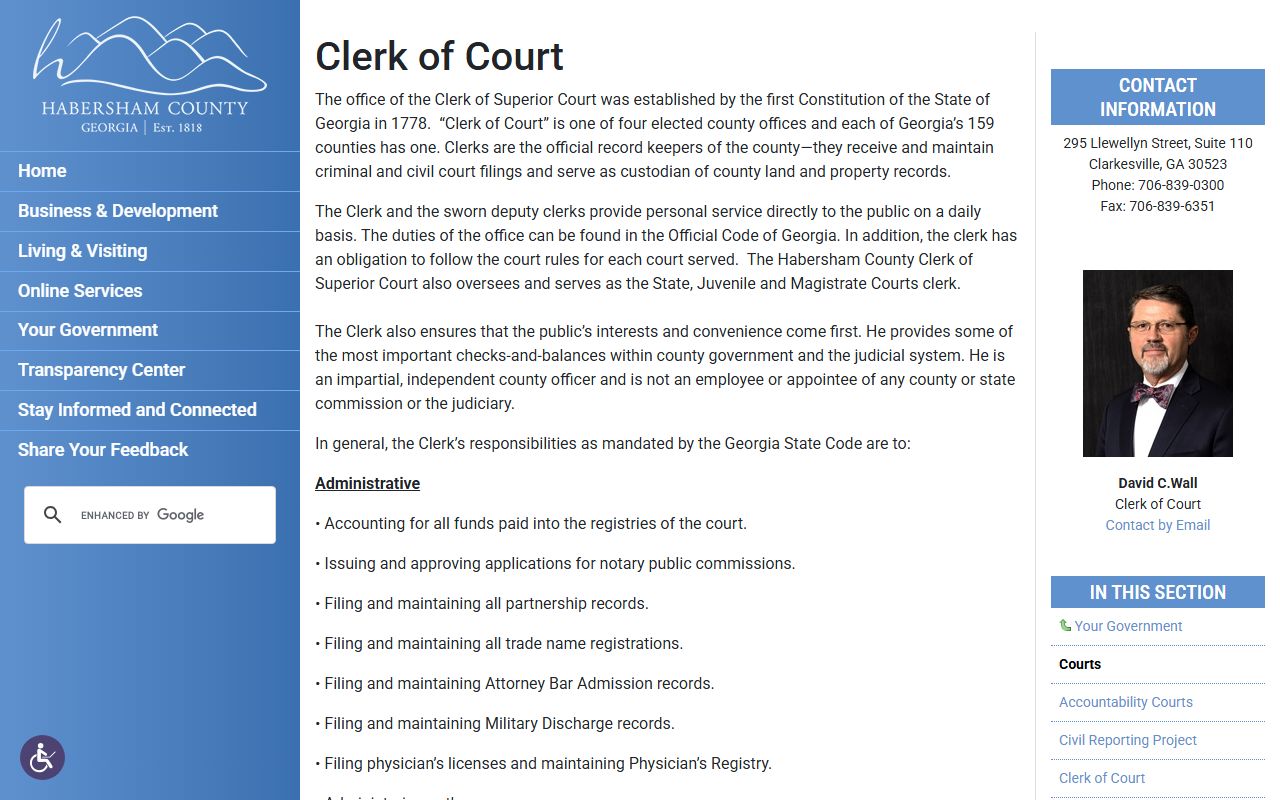
That office-level source is important because the account-based search tools do not replace Clerk inspection or certified-copy requests.
Habersham County Court System
Georgia does not use a county-level District Court for Habersham. The main general-jurisdiction trial court is Superior Court, and Habersham is part of the Mountain Judicial Circuit with Banks, Rabun, and Stephens Counties. State Court is a separate county-wide trial court for misdemeanors and traffic. Probate, Magistrate, Juvenile, and Municipal Courts each keep their own records or route requests through the office assigned by law.
Appeals from Habersham County trial courts usually move to the Court of Appeals of Georgia unless a matter belongs in the Supreme Court of Georgia. Local calendars may be circuit-wide and separated by judge and county. Public access also changes by court type, since juvenile records, adoption matters, mental-health materials, sealed filings, and protected identifiers are not handled like ordinary civil case files.
Case flow: Municipal, Magistrate, Probate, State, or Superior Court › Court of Appeals of Georgia › Supreme Court of Georgia when jurisdiction allows.
The Georgia Courts e-access page lists Habersham State and Superior access through provider systems rather than a single county-run free search page.
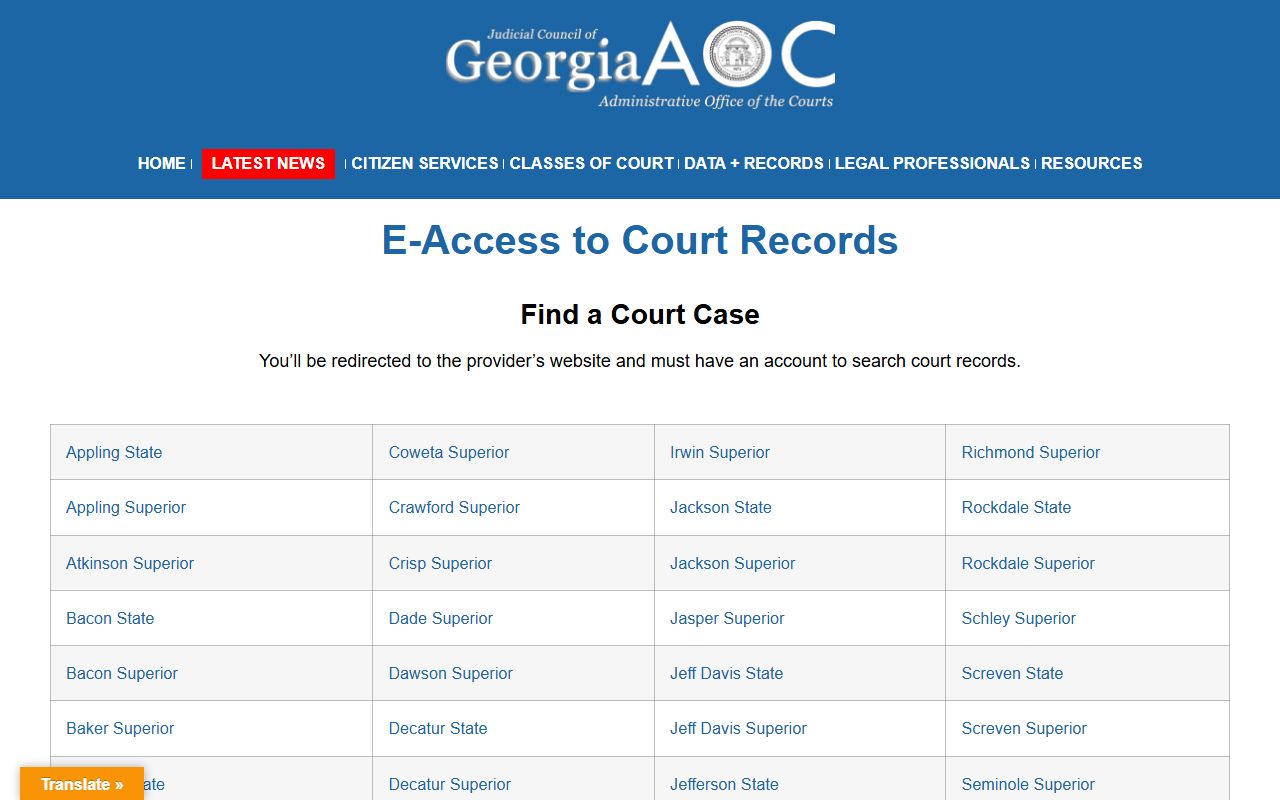
This statewide source helps explain why a Habersham County case search may send users to PeachCourt or another account-based provider.
| Court | Jurisdiction | Case Types |
|---|---|---|
| Superior Court | General jurisdiction in the Mountain Judicial Circuit | Felony, divorce, equity, land-title, serious civil, and appeals from lower courts |
| State Court | County-wide trial court | Misdemeanors and traffic cases |
| Probate Court | Statutory probate jurisdiction | Estates, wills, guardianships, conservatorships, marriage licenses, and weapons carry licenses |
| Magistrate Court | Limited civil and first-appearance functions | Claims up to $15,000, dispossessory actions, distress warrants, ordinances, and warrant matters |
| Municipal Courts | City-limit jurisdiction | Traffic, ordinance, and state-law violations inside city limits |
Habersham County Courthouse Offices
The main courthouse complex in Clarkesville is the hub for Superior, State, Juvenile, Probate, Magistrate, and Clerk services. The Clerk of Superior Court is in Suite 110, Probate Court is in Suite 24, and Sheriff's Court Services is at the courthouse entrance in Suite 44. The same building is often the practical starting point for a court-record inspection, certified copy, probate question, or court-paper service issue.
Habersham County Courthouse
295 Llewellyn Street
Clarkesville, GA 30523
706-839-0300
Clerk of Superior Court
295 Llewellyn Street, Suite 110
Clarkesville, GA 30523
706-839-0300
Habersham County Court Record Types
Record type matters because it points to the right counter and the right access rule. Civil complaints, answers, motions, orders, judgments, garnishments, and liens may be found in Superior, State, or Magistrate Court depending on the claim. Criminal records divide by seriousness and venue. Felonies belong in Superior Court, misdemeanors commonly belong in State Court, and city-limit ordinance or traffic offenses may be handled by a municipal court.
Family, probate, traffic, juvenile, and warrant-related records each have their own limits. Divorce is a Superior Court matter. Probate files are held by Probate Court. Traffic records may be county State Court records or city municipal records. Juvenile records are restricted by Georgia law. Warrant information may involve Magistrate Court, Superior Court, State Court, municipal courts, Sheriff's Court Services, or jail bonding channels.
- Criminal records show filed charges, pleas, motions, hearings, disposition, sentence, probation, and fines when public.
- Civil records include pleadings, service, orders, judgments, liens, garnishments, and collection documents.
- Family and divorce records are Superior Court files, with redaction for sensitive financial or child information.
- Probate records include estates, wills, letters, guardianships, conservatorships, and marriage-license materials.
- Traffic records show citation, court date, plea, disposition, fine, and reportable outcomes.
What Habersham County Court Records Show
Public calendar records from the Mountain Judicial Circuit show more than a hearing date but less than a full case file. A sample Habersham Superior Court calendar entry showed the court and calendar header, judge, case number, party caption, status, case type or cause, filed date, hearing time, attorneys, and notes. It did not attach pleadings, orders, sentence terms, financial ledgers, or sealed documents. Full files should be requested from the court or Clerk office that holds the record.
| Field | What It Shows |
|---|---|
| Case Number | Calendar samples use a year, case-type letters, and sequence, such as a civil-number format. |
| Filing Date | The date the case or matter was filed, shown in month/day/year format on the sample calendar. |
| Parties | Plaintiff and defendant, petitioner and respondent, State and defendant, estate, ward, or applicant names. |
| Charges / Cause | Criminal charge or civil cause, such as a petition for decree or declaration. |
| Disposition | The outcome of a case or charge, when the full record has reached that point. |
| Sentence / Judgment | Criminal punishment, probation, fines, restitution, civil judgment, or final order when public. |
Habersham County Court Access Laws
Georgia public-record and court-access rules support public inspection of many records, but they do not make every file public or every search free. The county Clerk page states that court records are available for public inspection and copying during normal working days. Sheriff's Office records require a written request with enough detail to identify the record. Court rules, juvenile statutes, probate statutes, and record-restriction law define the main limits.
Key Statutes:
O.C.G.A. 50-18-70 - Georgia public records are presumed open, and exceptions are read narrowly.
Uniform Superior Court Rule 21 - Superior Court records are public unless access is limited by law or court procedure.
O.C.G.A. 35-3-37 - Georgia record restriction can limit eligible criminal-history access for non-criminal justice purposes.
O.C.G.A. 15-11-700 - juvenile proceedings are not open to the general public unless the statute allows admission.
Restricted Habersham County Court Records
Restricted records include juvenile matters, sealed criminal-history records, adoption records, mental-health or involuntary-treatment materials, protected addresses, Social Security numbers, financial account numbers, and minor-child information. The Clerk manages Juvenile Court records, but Georgia law excludes the general public from many juvenile proceedings and files. Public-facing pages should not be expected to show juvenile case details the way adult civil or criminal records may appear.
Georgia uses the phrase record restriction for many criminal-history limits. The GBI explains that post-July 1, 2013 eligible arrests generally require contact with the prosecutor, while older arrests may start with the arresting agency. A court file may still exist even when a criminal-history record is restricted, so a person may need to check both the prosecutor or arresting agency and the court that handled the case.
Habersham County Specialty Courts
The Mountain Judicial Circuit Accountability Courts serve Habersham and nearby circuit counties. Official programs include Drug Court, Mental Health Court, Family Dependency Treatment Court, Parental Accountability Court, and Daily Reporting Center. These programs can affect court dates, compliance reviews, treatment requirements, and final dispositions, so they matter when reading a criminal or family-related docket.
Drug Court is described as a way to stop drug and alcohol abuse and related criminal activity while giving eligible defendants a structured second chance. Mental Health Court is a voluntary, judicially supervised treatment-based program for people with documented mental-health diagnoses. Family Dependency Treatment Court and Parental Accountability Court can create review dates in family or child-support matters.
Habersham County Sheriff Records
The Habersham County Sheriff's Office is led by Sheriff Robin Krockum and is based at 1000 Detention Drive. The agency handles jail operations, open records, Court Services, patrol, investigations, sex offender registration, and court-paper service. The Detention Center opened in the mid-1990s with 130-inmate capacity, while official jail information says daily population can run about 150 to 230 and may require out-of-county housing.
The official Sheriff's Office homepage documents the sheriff, public resources, divisions, and contact points for law-enforcement records that sit outside the court file.
Sheriff records should be treated as a separate access path from Clerk-managed Habersham County court records.
No active official public inmate roster or active warrant search was located in the official research. For Habersham County inmate records, use the jail, Sheriff's open-records process, and GDC offender search for sentenced state offenders. For warrant questions, use Sheriff's Court Services, Magistrate Court, the issuing court, and the warrant records fallback chain.
Marriage, Divorce, and Probate Court
Marriage licenses are issued by Habersham County Probate Court, while divorce cases are Superior Court records handled through the Clerk of Superior Court. Local Probate Court material gives a marriage-license fee of $77, reduced to $37 with proof of six hours of counseling. Probate Court also handles estate and guardianship matters, which may contain restricted medical, minor, or protected personal information.
The county Probate Court page identifies the local probate office, judge, suite address, phone, and fax for probate and marriage-license matters.
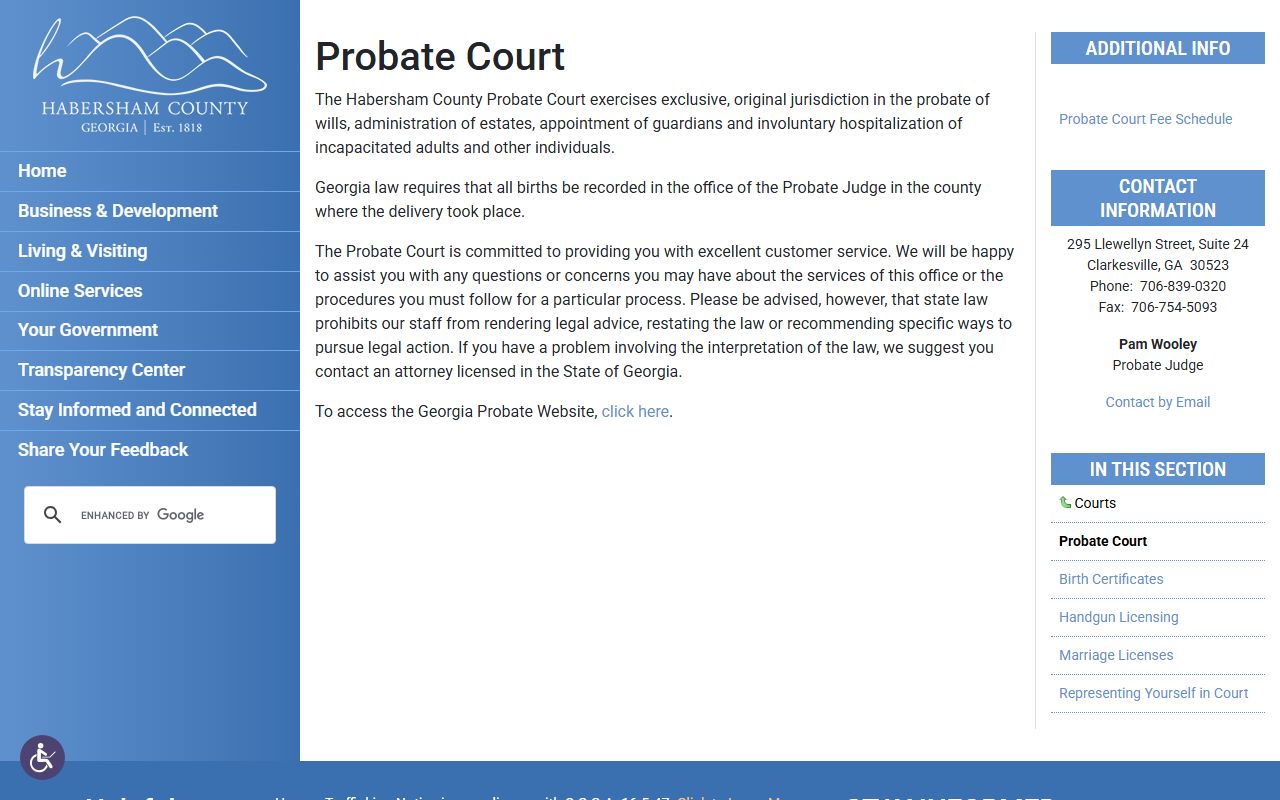
That probate source should be used for estate and marriage-license records, while divorce remains with the Superior Court file.
Georgia marriage rules require both applicants to appear with proof of age, prior-divorce proof if applicable, and payment. If one applicant is a Georgia resident, any Georgia probate court may issue the license. If neither applicant lives in Georgia, the license must come from the county where the ceremony will take place.
- Testator
- A person who made a will.
- Executor
- The person named to administer an estate under a will.
- Conservator
- A person appointed to manage property or financial affairs for another person.
Habersham County Court Records Fees
Official research located several concrete amounts, but not every court-copy or filing fee was available from accessible county pages. The safe approach is to confirm the copy amount with the Clerk, Probate Court, or sheriff before ordering. Traffic amounts depend on the citation and court. The Sheriff's bonding page lists a separate bond fee, and Probate Court lists the marriage-license amount and counseling discount.
| Item | Amount |
|---|---|
| Plain court-record copy | Not located in accessible official sources |
| Certified court-record copy | Not located in accessible official sources |
| Marriage license | $77, or $37 with proof of required counseling |
| Sheriff bond fee | $20 cash per bond except municipal bonds |
| Traffic online payment | Amount depends on the citation and court |
Read Habersham County Court Records
A docket is the chronological list of filings and events in a case. A motion is a written request asking a judge to act. An order is the judge's written ruling. A disposition is the outcome of a case or charge. A plea is the defendant's formal response in a criminal case, while a sentence is the punishment imposed after conviction. Calendar status codes should not be guessed; the research found a sample status value but did not confirm a local code legend.
Charges and convictions are not the same thing. A charge may first appear in a booking record, warrant paper, accusation, or indictment. It may later be amended, reduced, dismissed, merged, or resolved by plea or trial. The final criminal court record is the better source for outcome and sentence, while a jail or arrest record is often an earlier snapshot.
Accuracy and Record Limitations
Online records can lag behind courtroom events. A calendar may show a scheduled hearing that later gets continued. A ticket payment may close the court matter but still take time to reach Georgia DDS. A jail custody status can change after bond, transfer, sentence, or out-of-county housing. Certified copies and official explanations must come from the court or agency that created the record.
Note: Confirm court dates, warrants, custody, and certified-copy needs with the originating Habersham County office before relying on online results.
History of Habersham County Courts
Habersham County was created in 1818 and named for Joseph Habersham. Local courthouse history is specific. The current courthouse is not the old nineteenth-century building. Research from the New Georgia Encyclopedia and Digital Library of Georgia ties the modern downtown courthouse to the county's fourth courthouse, built after a prior courthouse was torn down in 1963. A bell tower and elevator were added in 1983.
The office of Clerk of Superior Court also has deep Georgia roots. The local Clerk page notes that the office was established by Georgia's first Constitution in 1778, which is why many long-term court records remain tied to the Clerk even when online portals are added later.
Frequently Asked Questions
Can Habersham County court records be searched online?
Some access is online, but the central case search is not a simple open public portal. The Clerk links to Icon Case Management, which showed a login requirement. Georgia Courts lists Habersham State and Superior through PeachCourt, and Mountain Judicial Circuit calendars provide public calendar PDFs.
Where are divorce records kept?
Divorce is a Superior Court matter in Georgia. Habersham divorce records should be requested from the Clerk of Superior Court at Suite 110 or through authorized account-based court-record systems when available.
Does the sheriff publish an inmate roster?
No active official public inmate roster was located in the official research. Use the Detention Center, Sheriff's open-records request process, and GDC offender search for sentenced state offenders.
Are traffic court records the same as a driver record?
No. A court traffic record shows the citation, court handling, plea, disposition, and fine. The Georgia DDS driver record shows reportable convictions, points, suspensions, and license status.
Do city courts matter in Habersham County?
Yes. The county municipalities page lists local cities, and traffic or ordinance cases inside city limits may be handled by a municipal court rather than county State Court.
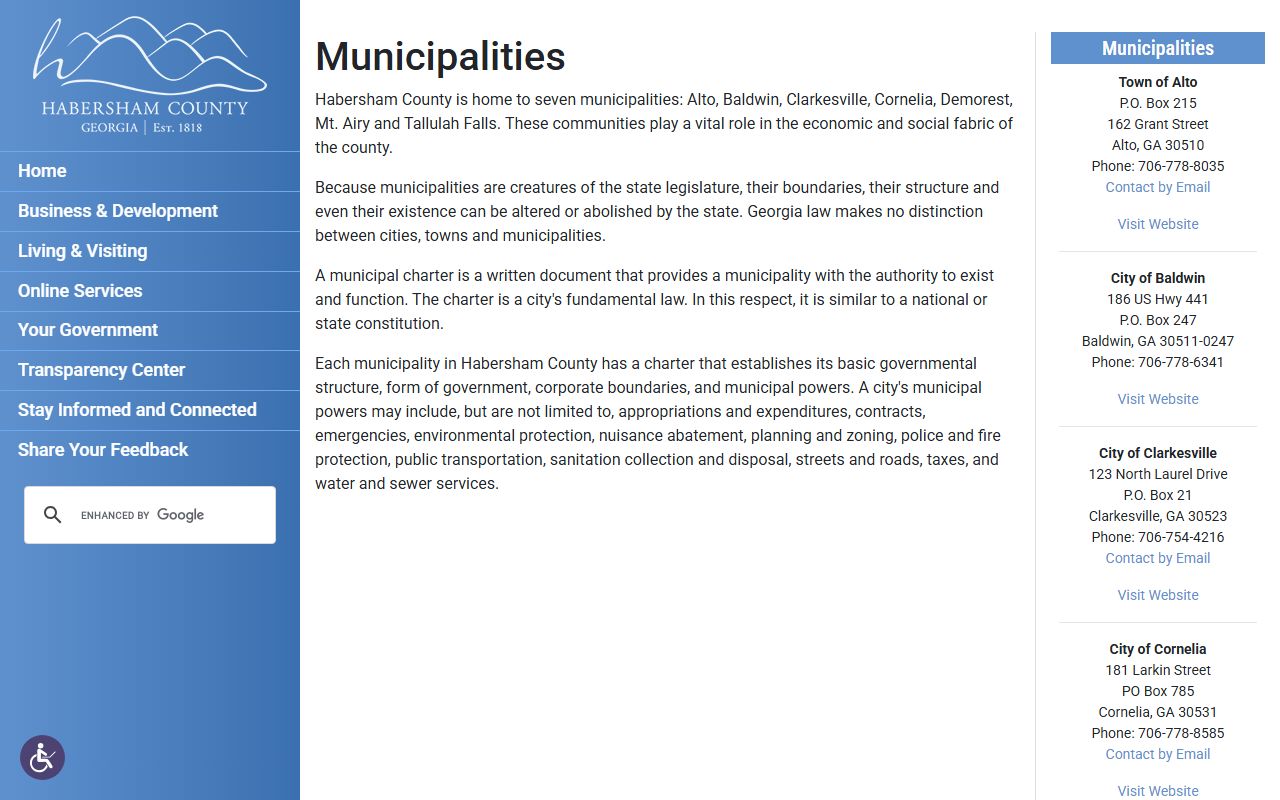
City routing is especially important for Clarkesville, Cornelia, Baldwin, and other municipal citation records.
Where do federal cases go?
Habersham County is in the Gainesville Division of the U.S. District Court for the Northern District of Georgia. The federal Gainesville Division page confirms Habersham County is part of that division.
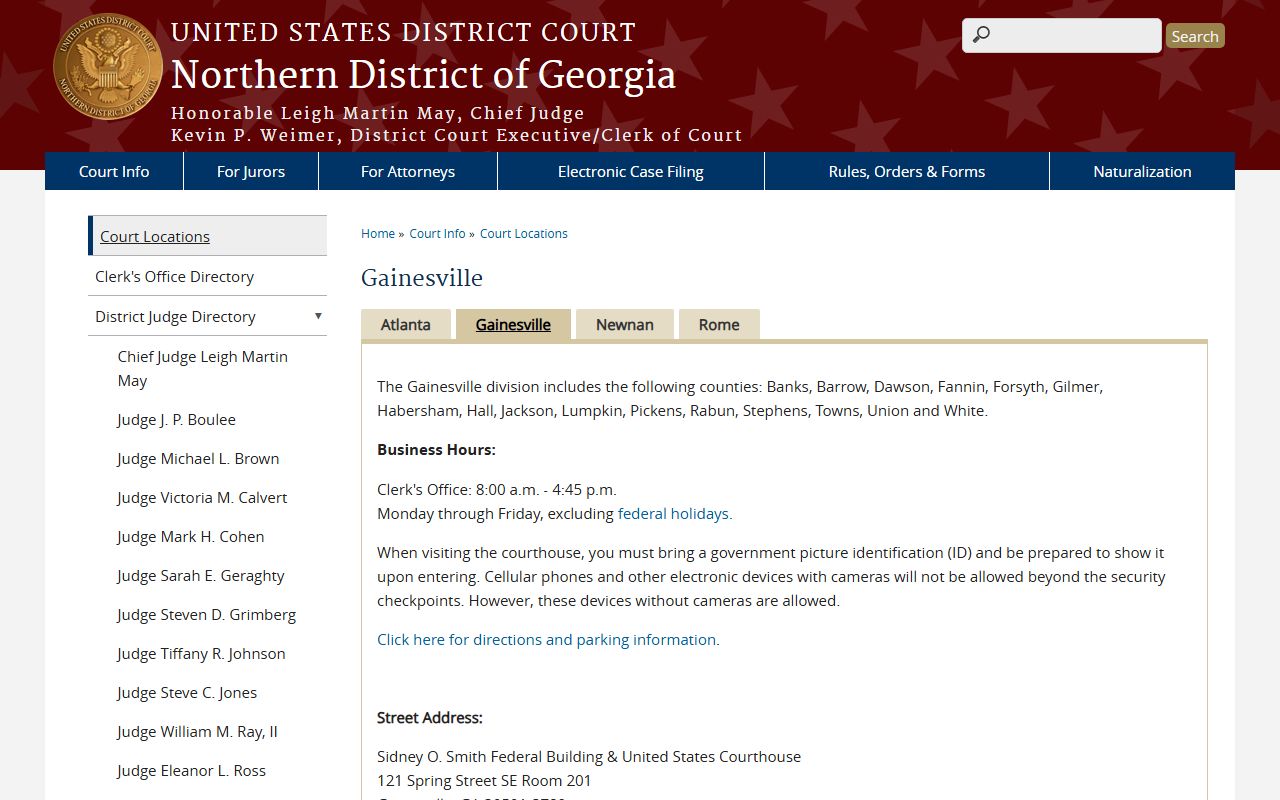
Federal records are separate from Habersham County court records and generally use federal court channels such as PACER.