
Habersham County Criminal Court Records
A criminal court record is the case file the court keeps once prosecution begins. In Habersham County, felony cases are Superior Court matters, misdemeanor cases are commonly State Court matters, and minor city-limit ordinance or traffic offenses may be handled in Municipal Court. The file can include the accusation or indictment, warrant or arrest references, charges, arraignment, pleas, motions, hearing entries, orders, disposition, sentence, probation, fines, restitution, and appeal papers.
This is not the same as a jail roster, booking sheet, or incident report. Arrest or booking information may start with law enforcement, while the criminal court record follows the case in court. Charge-level details are closely related, but the full court file is broader because it shows how the case moved, what the defendant pleaded, what the judge ordered, and how each charge ended. For the charge-focused path from arrest into court, use Habersham County arrest records and court charges.
The Mountain Judicial Circuit District Attorney page identifies the prosecution office for crimes in Habersham, Rabun, and Stephens Counties.
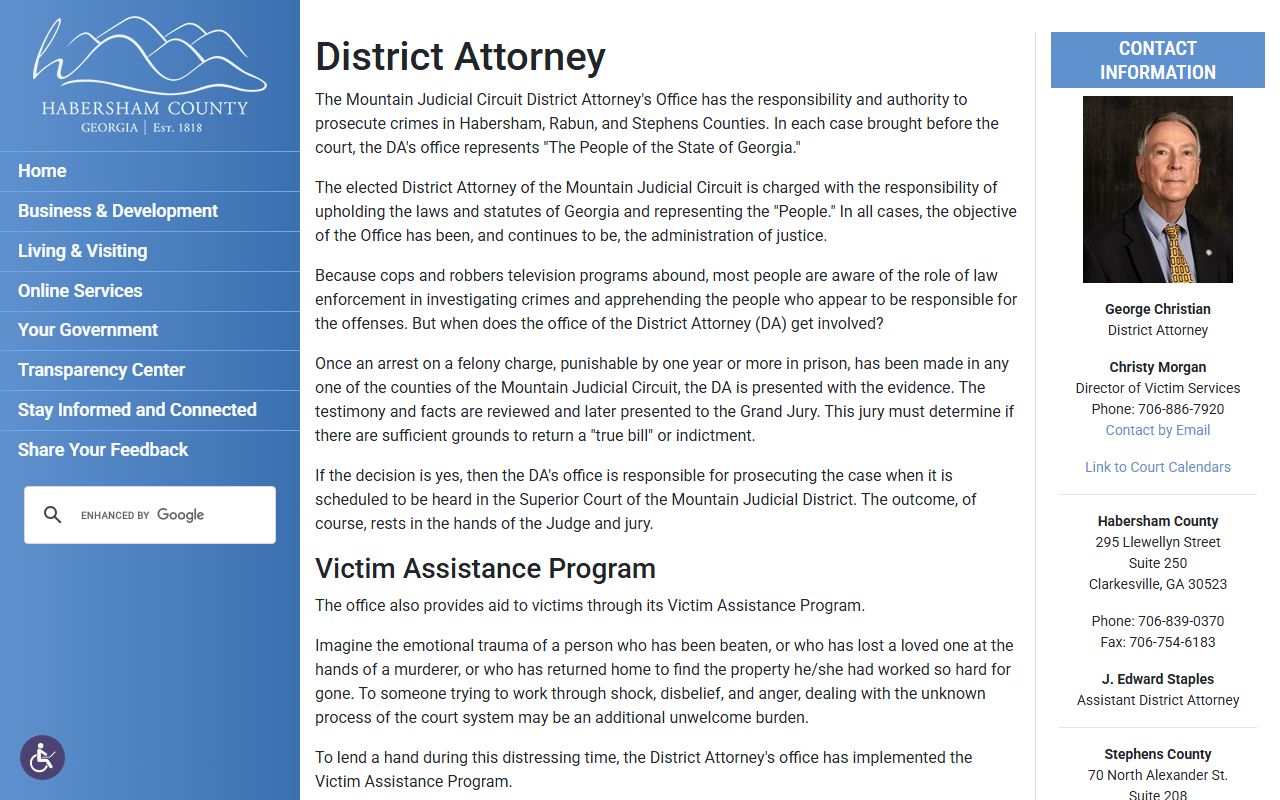
That prosecution context helps explain why felony criminal court records in Habersham County are tied to the Mountain Judicial Circuit, not just a single county office.
Search Habersham County Criminal Court Records
Habersham County criminal court records use the same official access limits found in the broader court-record research. The Clerk of Superior Court case-search link goes to Icon Case Management, but the public capture showed a login page rather than open search fields. Georgia Courts e-access lists Habersham State and Habersham Superior through PeachCourt, and the state page says users must have a provider account to search court records. For public hearing dates, Mountain Judicial Circuit calendars may show criminal or civil calendar settings when posted.
- Determine the court. Use Superior Court for felonies, State Court for county-wide misdemeanors, and Municipal Court for city-limit ordinance or traffic prosecutions.
- Search or sign in through the official court-record provider path if the case is available through Icon Case Management or PeachCourt.
- Use Mountain Judicial Circuit calendars for posted hearing dates when the case appears on a public Superior Court calendar.
- Request the case file, certified copies, or disposition record from the Clerk of Superior Court when portal access is not enough.
- Use the Sheriff's Office open-records process only for law-enforcement records, not for certified court case files.
Defense access is a separate issue. The Habersham County Public Defender page states that Habersham uses a public defender system for indigent defendants in Superior and State Courts and juveniles.
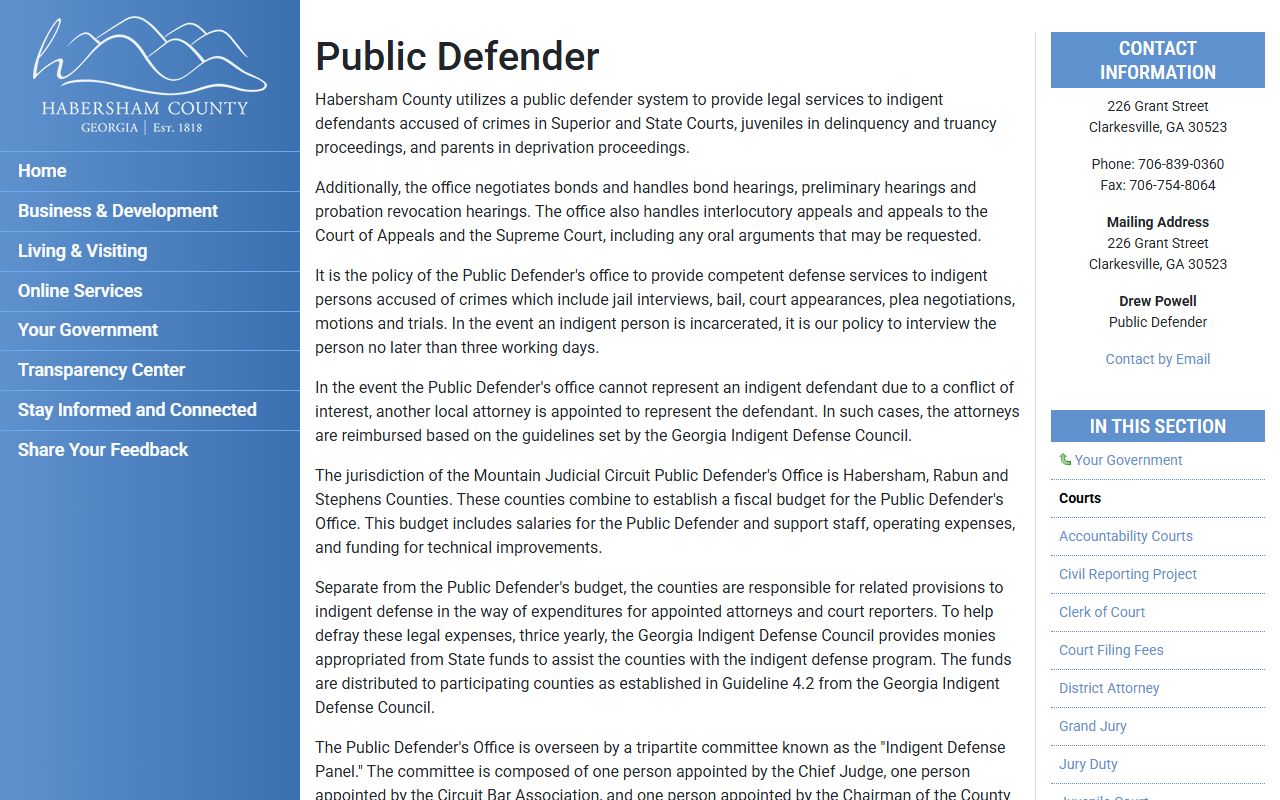
Public defender information can help identify the court level and defense system, but the official criminal court record remains with the court and clerk.
Habersham County Criminal Case Flow
Criminal court records make more sense when read as a process. A charge may begin with an arrest, warrant, citation, accusation, or indictment. The court file then records hearings and filings as the case moves through arraignment, pretrial matters, plea or trial, disposition, and sentencing. Not every case has every stage. Some charges are dismissed, reduced, amended, indicted differently, merged at sentencing, or resolved by plea.
Case flow: Charges Filed › Arraignment › Pretrial and Motions › Plea or Trial › Disposition › Sentencing
- Charges filed
- The prosecutor or court filing identifies the alleged offense and opens or advances the criminal case.
- Arraignment
- The defendant is formally advised of charges and enters a plea or has a plea recorded.
- Pretrial and motions
- Parties file motions, discovery issues arise, hearings are set, and orders may be entered.
- Plea or trial
- The case resolves by plea, bench trial, jury trial, dismissal, or another court-approved outcome.
- Disposition and sentencing
- The court records the outcome and, after conviction, the punishment such as jail, prison, probation, fines, restitution, or conditions.
The Georgia Public Defender Council listing places Habersham County in the Mountain Circuit public defender system.
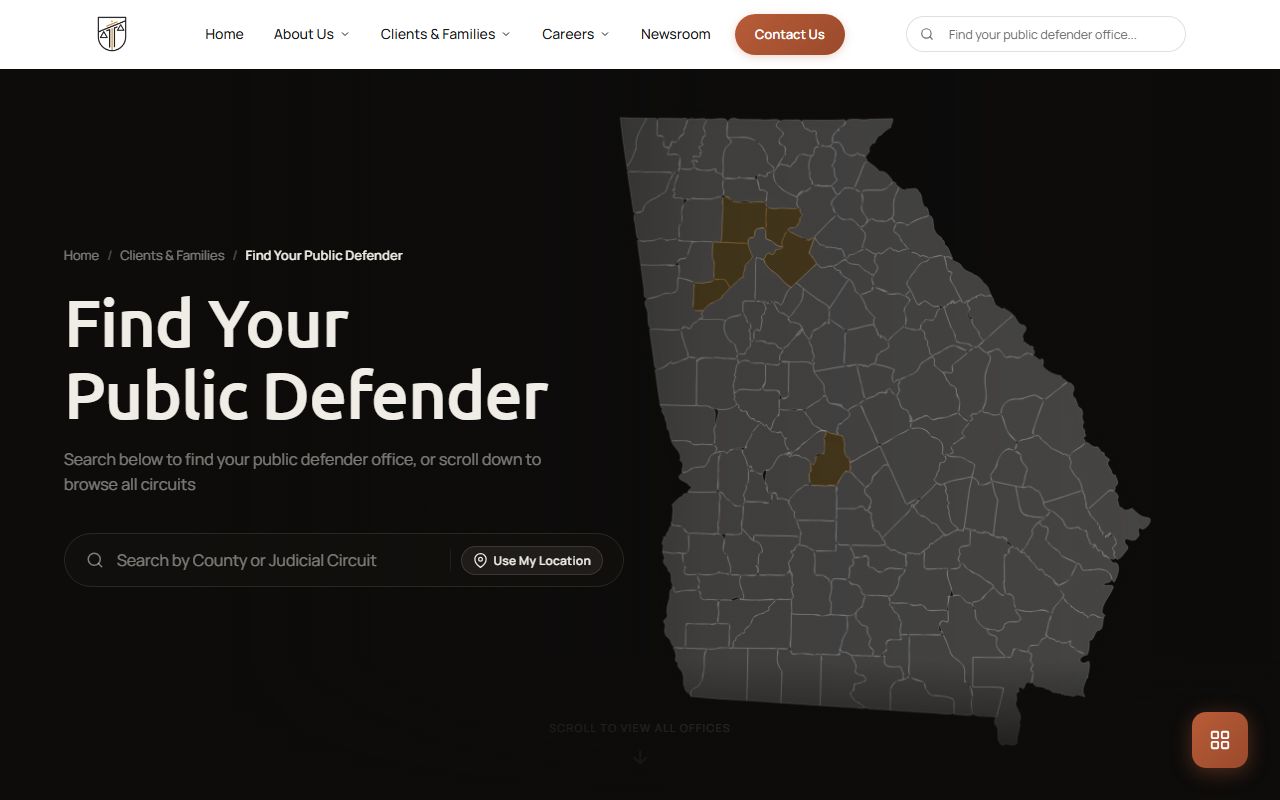
That listing supports the research finding that criminal defense services for eligible Habersham defendants are organized at the circuit level.
What Habersham Criminal Court Records Show
A Habersham County criminal court record may combine identifying fields, procedural entries, charge details, hearing data, attorney information, and outcome terms. Public calendar samples show fields such as court, judge, case number, status, case type, filed date, parties, attorneys, and hearing time. Criminal case files can add charge language, indictment or accusation data, pleas, motion rulings, disposition, sentence, probation, costs, fines, restitution, and appeal notices when those items are public.
| Field | What It Shows |
|---|---|
| Case number | The court's case identifier, often built from filing year, case letters, and sequence. |
| Court | Superior, State, Municipal, Magistrate-related, or another venue connected to the criminal matter. |
| Defendant | The person accused in the criminal case. |
| Charges | The offenses filed, amended, reduced, dismissed, or carried to disposition. |
| Arraignment and plea | The formal plea stage, such as guilty, not guilty, nolo, or later plea change if shown. |
| Motions and orders | Requests by parties and written rulings by the judge. |
| Hearings | Calendar settings, hearing dates, continuances, trial dates, or review hearings. |
| Disposition | The outcome for the case or each charge. |
| Sentence | Jail, prison, probation, fines, restitution, conditions, or other penalties after conviction. |
| Restrictions | Sealed, juvenile, redacted, or record-restricted material may be withheld from public copies. |
Habersham Charges vs Convictions
A charge is an allegation in a criminal court file. A conviction is an outcome after a guilty plea, verdict, or other conviction event. Habersham County criminal court records can show charges that did not become convictions. A charge may be dismissed, reduced, amended, nolle prossed, merged for sentencing, or resolved by acquittal. That is why a case summary must be read through the disposition and sentence fields, not just the first charge list.
| Point | Charge | Conviction |
|---|---|---|
| Meaning | An alleged offense filed by accusation, indictment, citation, complaint, or related charging paper. | A final criminal outcome based on plea, verdict, or court finding. |
| Timing | Appears early or changes during the case. | Appears after plea, trial, or final disposition. |
| Record risk | May remain visible even if later dismissed unless restricted or sealed. | May affect sentence, probation, fines, and criminal-history consequences. |
| How to verify | Read the charge status and docket entries. | Read the disposition, sentence, and final order or judgment. |
Sealed vs Expunged Records
Georgia research for Habersham uses the term record restriction for many criminal-history matters. The Georgia Bureau of Investigation states that criminal history record restrictions are governed by O.C.G.A. 35-3-37 and can limit access for non-criminal justice purposes when approved through the proper process. For arrests after July 1, 2013, GBI says the person generally contacts the prosecutor. For older arrests, the application starts with the arresting agency.
| Point | Sealed | Expunged or Restricted |
|---|---|---|
| Basic effect | Hidden from ordinary public court access by law or court order. | Georgia commonly uses record restriction, which limits eligible criminal-history access rather than simple deletion. |
| Where it may remain visible | Courts, law enforcement, or authorized parties may still have access. | Law enforcement, courts, and criminal justice agencies may still see restricted records. |
| Common examples | Juvenile files, protected filings, and court-ordered sealed material. | Eligible arrests and certain eligible convictions under the Georgia process. |
| Habersham starting point | Confirm the court and sealing order with the clerk. | Use the prosecutor or arresting agency route described by GBI, based on arrest date. |
The Georgia record restriction statute is the controlling source for eligibility and procedure.
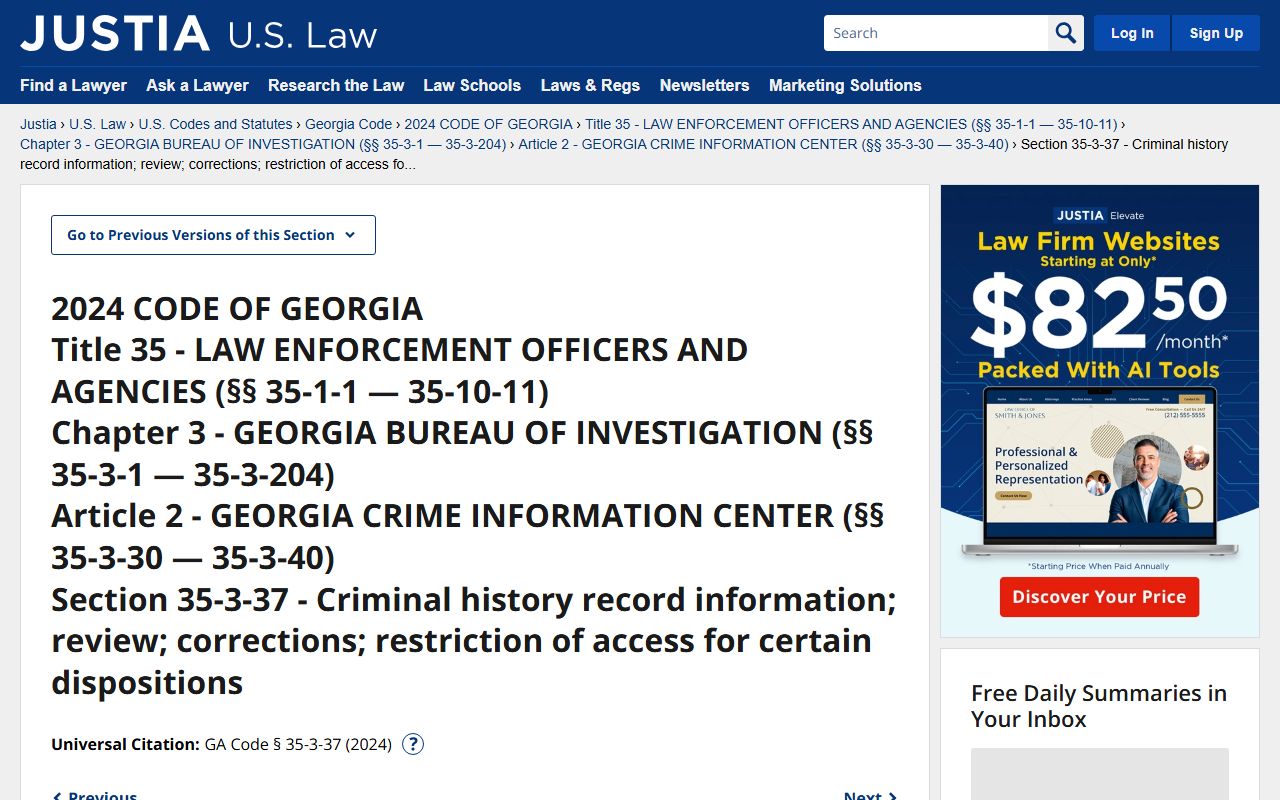
For Habersham County criminal court records, restriction should not be described as automatic deletion because the statute and GBI process preserve access for some official uses.
Public Access to Habersham Criminal Records
Adult criminal court records are generally public unless a statute, court rule, or order restricts them. O.C.G.A. 50-18-70 presumes public records are open for inspection and construes exceptions narrowly. Uniform Superior Court Rule 21 states that Superior Court records are public unless access is limited by law or the rule's access-limiting procedure. These access rules do not turn sheriff records, discovery files, and court files into one file. Each source keeps its own record.
Key access point: Start with the Clerk of Superior Court for court case files and the Sheriff's Office for law-enforcement records.
The GBI's official record restrictions page is useful when the question is not case access, but whether eligible criminal-history information can be limited.
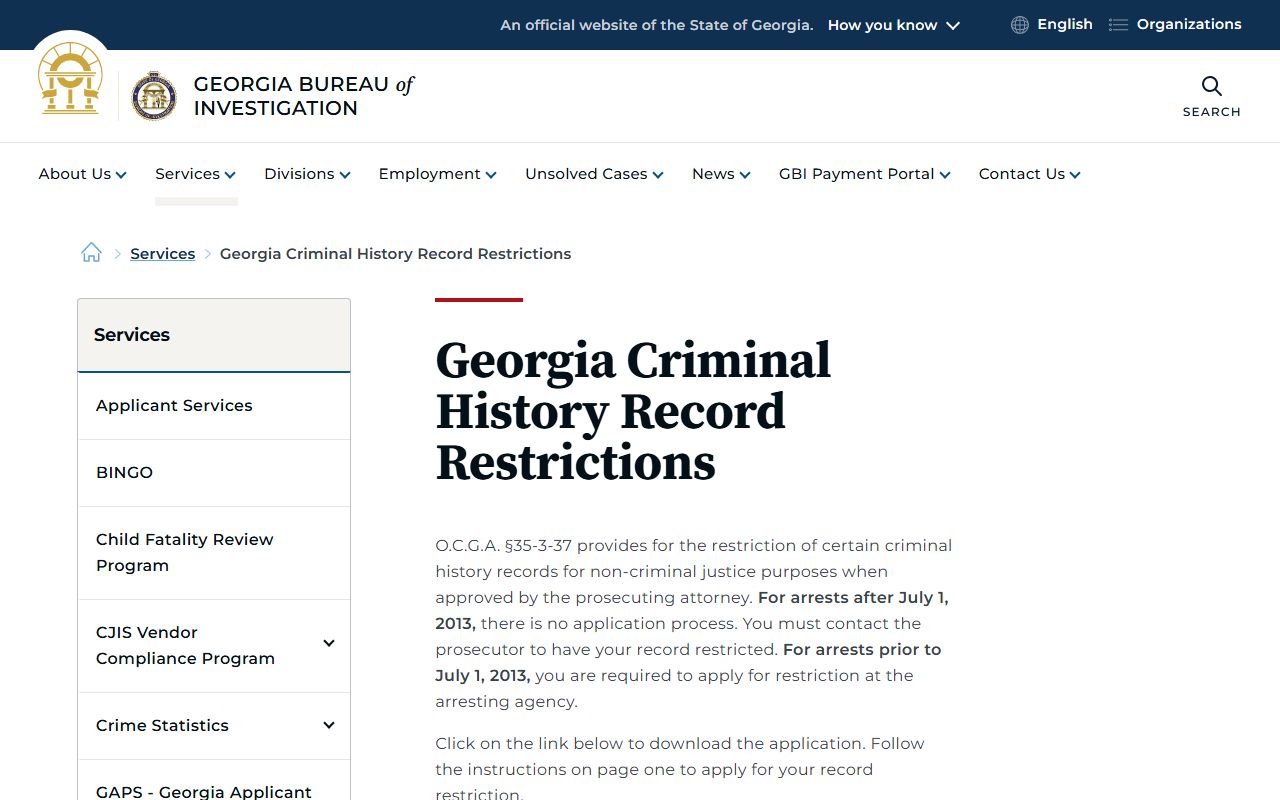
That statewide page is not a Habersham case search portal, but it explains why some criminal history may not appear in ordinary public searches.
Juvenile Criminal Court Restrictions
Juvenile court material is one of the clearest restrictions in the Habersham research. The Clerk of Superior Court manages Juvenile Court records, but Georgia statutes limit public access. O.C.G.A. 15-11-700 excludes the general public from juvenile proceedings unless the statute allows admission. Related statutes govern juvenile sealing and court-file access.
That means an adult-style criminal case search should not be expected to return juvenile dependency, delinquency, or CHINS files in the same way. If a juvenile record is involved, the correct path is the court or clerk process allowed by statute, not a general public lookup. Adoption, protected minor data, mental-health material, and protected addresses may also be unavailable or redacted.
The Georgia juvenile hearing access statute is the research-backed basis for treating juvenile material differently from adult criminal court files.
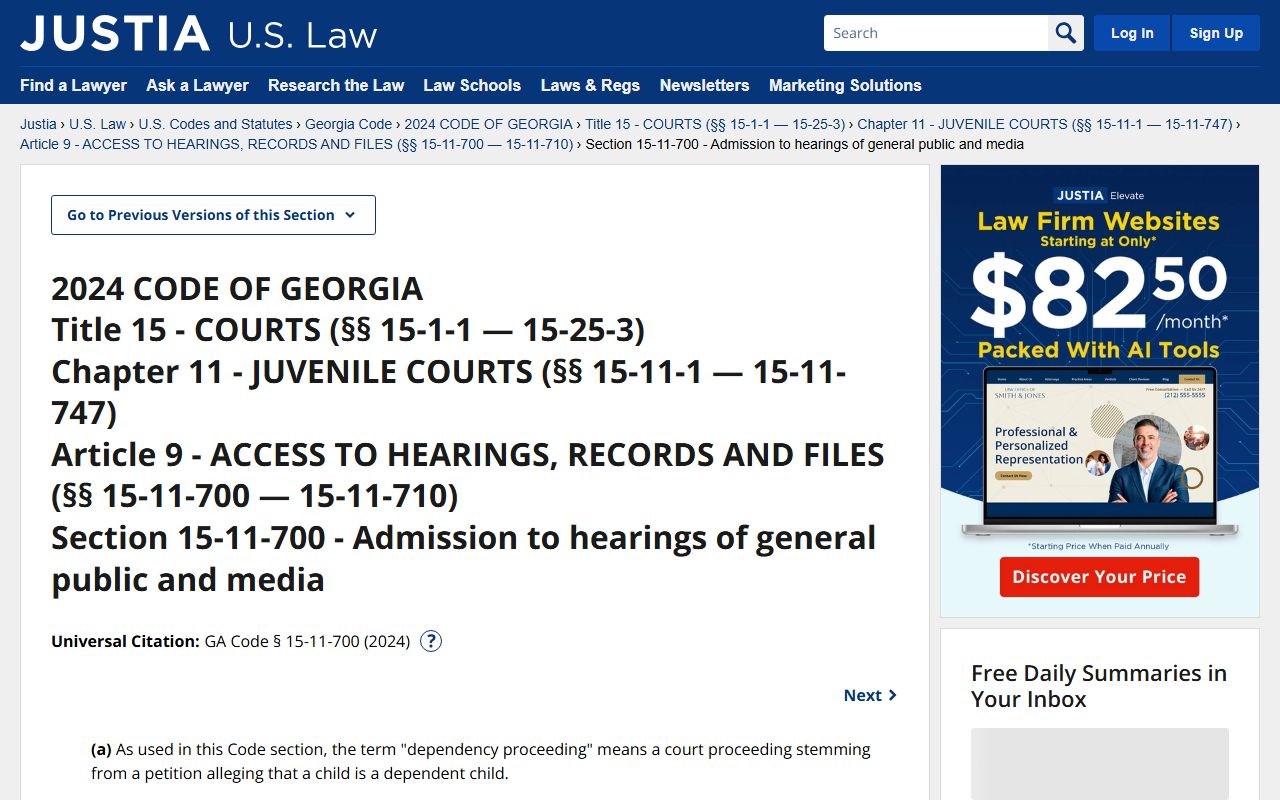
For Habersham County criminal court records, juvenile limits should be stated plainly because a missing public record may reflect legal restriction rather than a search error.
Requesting Criminal Case Copies
For certified criminal court records, start with the Clerk of Superior Court when the file is in Superior, State, or non-confidential Juvenile Court records. Bring the defendant name, case number if known, court level, approximate filing or hearing date, and the exact document needed. The research did not locate official plain-copy, certified-copy, or exemplified-copy fees, so copy cost should be confirmed before a large request is processed.
For arrest, incident, jail, or investigative records tied to the same event, use the Habersham County Sheriff's Office open-records process instead. The sheriff process asks for written request details such as name, phone, return address, names, dates, times, locations, and case numbers when available. Pending criminal discovery is not the same as a public copy request, and the sheriff page notes that attorneys or individuals may need to contact the Clerk and file the proper discovery motions.
Clerk of Superior Court
295 Llewellyn Street, Suite 110
Clarkesville, GA 30523
706-839-0300
8:00 a.m.-5:00 p.m. Monday-Friday