
Habersham County Arrest Records and Court Charges
Arrest records in Habersham County usually begin with the agency that made the arrest or booked the person into custody. The Sheriff's Office is the main county law-enforcement record holder for sheriff arrests, jail intake, incident records, and detention records. The official sheriff records page is the research-backed channel for written open-records requests, while the Detention Center is the direct contact point for current custody questions.
Court charges after arrest move into a different record stream. The Mountain Judicial Circuit District Attorney's Office prosecutes crimes in Habersham, Rabun, and Stephens Counties and is relevant to felony charging decisions, indictments, accusations, plea negotiations, and eligible Georgia record-restriction requests that require prosecutor approval. Felony cases are Superior Court matters. Misdemeanor cases commonly move through State Court, and city-limit ordinance or traffic cases may be Municipal Court matters.
For sheriff-side request instructions, use the Habersham County Sheriff's Office records page. That source documents the written-request process for law-enforcement records.
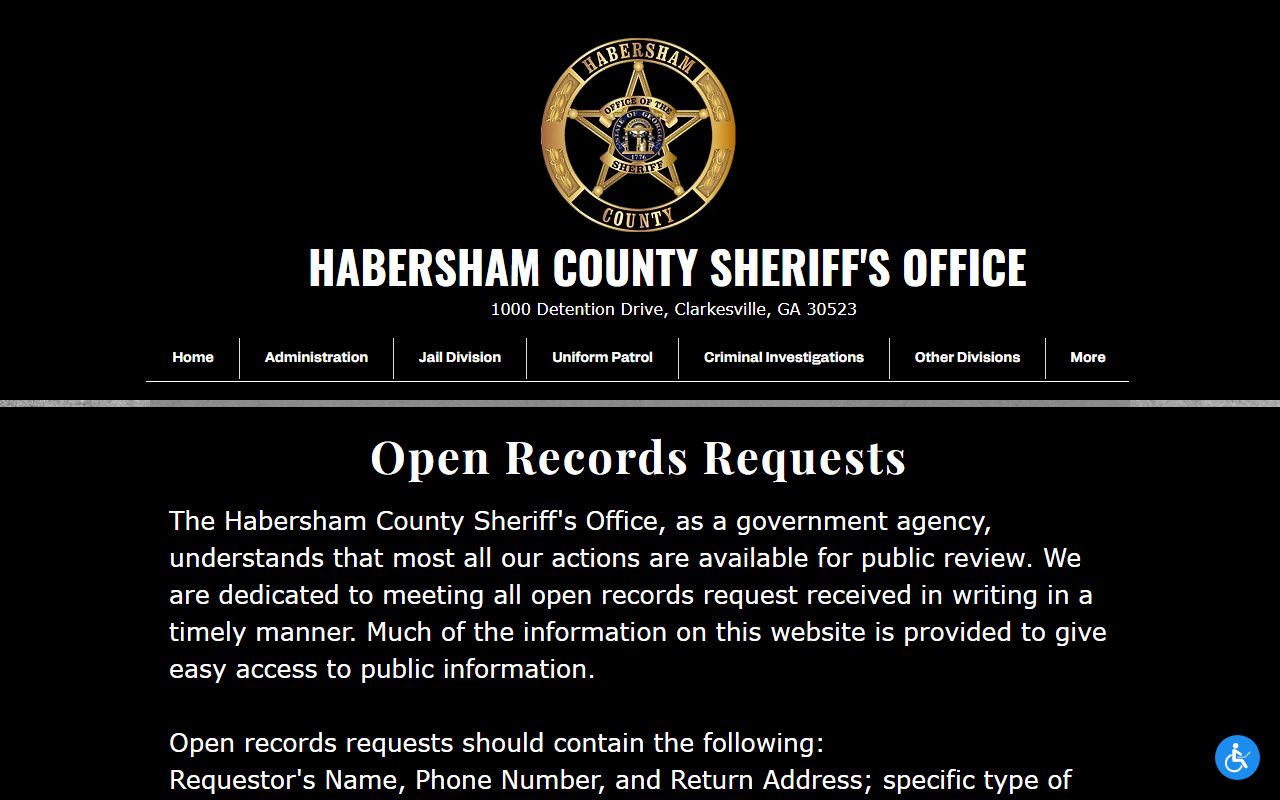
The sheriff records channel matters because arrest and booking details can exist before a prosecutor files the final court charge document.
How to Find Habersham County Arrest Records and Charges
Start by separating the question. If the question is whether a person was booked, is still in custody, or has a sheriff incident or arrest report, start with the Sheriff's Office. If the question is what charge is pending in court, what document filed it, or whether it was dismissed or reduced, start with the Clerk of Superior Court for Superior, State, and Juvenile Court case records.
- Check whether the person is in county custody by calling the Habersham County Detention Center at 706-839-0500, because no official current public inmate roster was located in the research.
- For arrest reports or booking records, submit a sheriff open-records request by email to so_records@habershamga.com or in person.
- For court charges, search or request the case through the Clerk of Superior Court, whose office manages Superior, State, and Juvenile Court records.
- For formal court filings, review the accusation, indictment, warrant paperwork, bond entry, docket entries, and disposition rather than relying only on the arrest charge.
The Habersham County Magistrate Court page is relevant for first-appearance, minor criminal, county ordinance, dispossessory, distress-warrant, and warrant-related context.
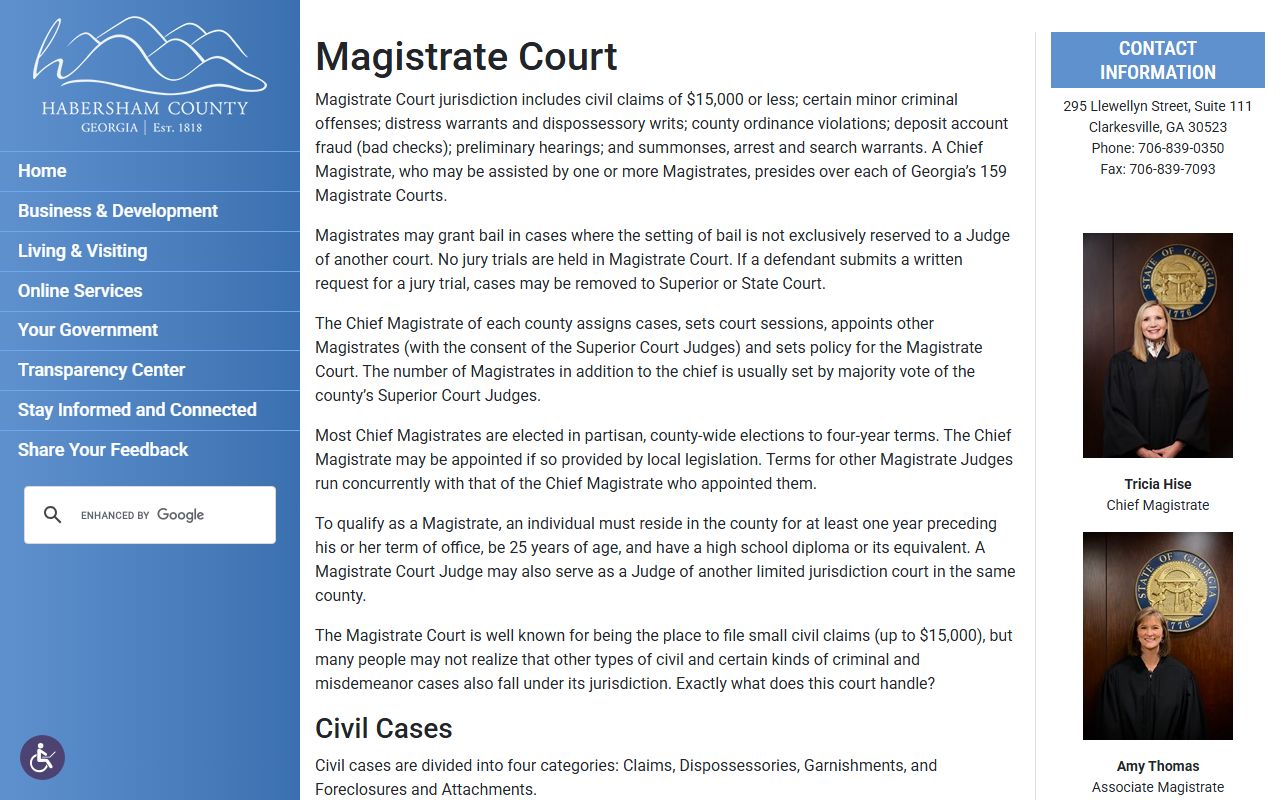
Magistrate Court can be part of the early arrest-to-charge path, especially before a case is fully reflected in a Superior or State Court criminal docket.
How Charges Get Filed After an Arrest
Charge information may first appear in booking records, warrant paperwork, bond records, magistrate first-appearance records, or the prosecutor's accusation or indictment. That is why a person may see one charge description at booking and a different charge description later in court. The court charge record is the version that follows the case through arraignment, motions, plea, trial, dismissal, sentencing, probation, fines, restitution, and appeal.
| Charging document | Who is involved | Habersham use context | What to verify |
|---|---|---|---|
| Warrant or first-appearance paperwork | Law enforcement, judge, or Magistrate Court | May appear early after arrest or before transfer into the main criminal case file. | Name, alleged offense, arresting agency, bond, and next court date. |
| Accusation | Prosecutor | Research identifies accusation as a prosecutor charging document often used for misdemeanors. | Final filed charge, count number, offense wording, and court. |
| Indictment | Grand jury and prosecutor | Research identifies indictment as a grand-jury charging document for felony prosecution. | Counts, felony level, date filed, and whether it replaced earlier arrest wording. |
The Sheriff's Court Services Division also has a role around court process. Its page describes courthouse security, service of civil and criminal subpoenas and summonses, service of other court papers, and out-of-state extraditions.
For those court-service functions, use the Habersham Sheriff's Court Services page.
Court Services does not replace the Clerk's case file, but it is part of the local process for subpoenas, summonses, court papers, and extraditions.
Charge Status and What It Means
Charges can change as a Habersham County criminal case moves from arrest to court. Research specifically warns that charge information is not identical to the final criminal case file because charges can be amended, dismissed, reduced, indicted differently, or merged at sentencing. A reliable charge review therefore looks at the current docket and the final disposition, not only the earliest arrest line.
| Status | What it means | Record source to check |
|---|---|---|
| Pending | The charge is still active and has not reached final disposition. | Clerk case docket, calendar, or court notice. |
| Amended or reduced | The filed charge changed from the earlier arrest or accusation wording. | Later docket entries, amended accusation, indictment, plea paperwork, or order. |
| Dismissed | The court record reflects that the charge did not proceed to conviction. | Disposition entry, order, or prosecutor filing. |
| Merged at sentencing | One count may be absorbed into another for sentencing purposes. | Sentencing order and final disposition. |
| Restricted | Georgia record restriction may limit public access for eligible criminal-history records. | GBI guidance, prosecutor, arresting agency, or court file as applicable. |
Charges vs. Convictions
A charge is an accusation or filed count. A conviction is a case outcome after a guilty plea, verdict, or other court disposition that legally establishes guilt. Habersham County criminal court records may show both, but they should not be treated as the same fact. A record can show an arrest and filed charge with no conviction, or it can show several original charges with only some counts resulting in conviction.
| Charge | Conviction | |
|---|---|---|
| Stage | Filed after arrest or by accusation, indictment, or warrant paperwork. | Final court outcome after plea, verdict, or sentencing. |
| Proof posture | Reflects alleged conduct and charging authority. | Reflects adjudicated guilt or accepted plea. |
| Where to confirm | Arrest record, charging document, docket, or calendar. | Disposition, judgment, sentencing order, or probation entry. |
| Can change | Yes, charges may be amended, reduced, dismissed, or indicted differently. | Changes usually require later court action, appeal, correction, or restriction process. |
Sealed and Restricted Charge Records
Georgia research for Habersham uses the term record restriction for many criminal-history access limits. The GBI record-restriction material cites O.C.G.A. 35-3-37 and explains that eligible criminal-history records may be restricted for non-criminal justice purposes when approved through the proper process. For arrests after July 1, 2013 that did not result in conviction, GBI directs the person to contact the prosecutor rather than file an application with GBI. For arrests before July 1, 2013, the process starts with the arresting agency.
| Restricted or sealed | Expunged | |
|---|---|---|
| Georgia terminology in research | Record restriction is the research-backed term for eligible criminal-history limits. | The research does not support promising destruction of the court record. |
| Public visibility | May be limited for ordinary public or non-criminal justice access. | Do not assume a Habersham record is destroyed without a specific legal order. |
| Where to start | Post-July 1, 2013 arrests usually start with the prosecutor; older arrests start with the arresting agency. | Confirm any court petition or order with the Clerk before filing. |
Charge Codes and Severity Levels
Habersham County criminal records can include felony, misdemeanor, minor ordinance, and traffic-related charges depending on where the event occurred and which court has jurisdiction. Superior Court handles felony criminal matters. State Court handles county-wide misdemeanors and traffic cases. Municipal courts in places such as Clarkesville, Cornelia, and Baldwin can handle city ordinance and traffic offenses arising inside city limits.
A single arrest can produce several separate counts. Each count should be read with its court, case number, status, and disposition. Financial fields may include fines, fees, restitution, bond, and court costs. Docket entries may show arraignment, motions, continuances, pleas, judgments, sentencing, notices, and appeals.
Statewide Charge and Criminal History Lookups
Georgia public-access rules and criminal-history restrictions sit beside local court access. O.C.G.A. 50-18-70 provides that Georgia public records are presumed available for inspection without delay, with exceptions interpreted narrowly. Uniform Superior Court Rule 21 says Superior Court records are public unless access is limited by law or by the rule's access-limiting procedure.
For the public-records statute text, use O.C.G.A. 50-18-70.
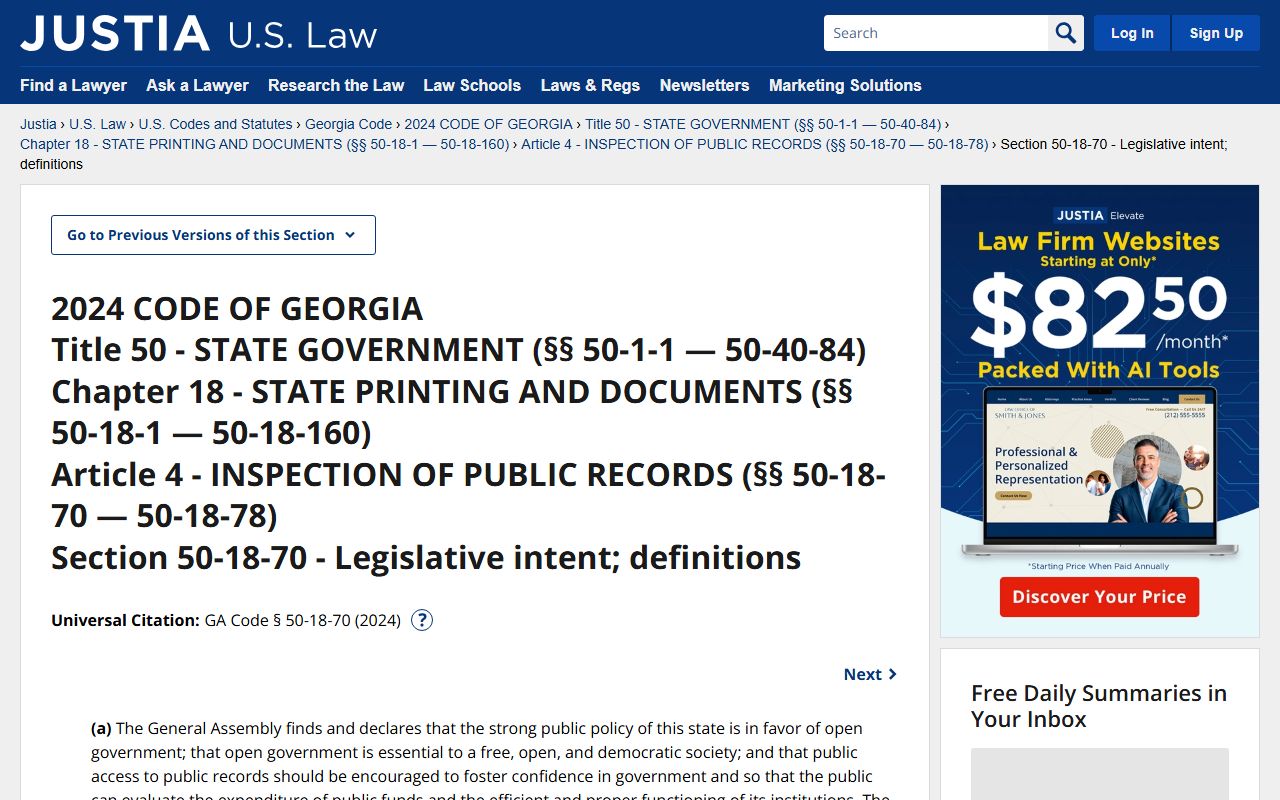
The statewide public-records rule supports access, but local offices still control the records they maintain and may redact or withhold restricted material.
Background Check Considerations
Casual court-record research is different from an FCRA-regulated background check. A Habersham arrest entry, court charge, or calendar listing should be verified against the originating office before it is treated as current or complete. Court records may omit restricted criminal history, juvenile material, protected identifiers, sealed filings, and pending investigation details.
Important: This website is not a consumer reporting agency and cannot be used for FCRA-regulated screening decisions.
Restricted Charge Records in Habersham County
Juvenile records are restricted under Georgia law. Research cites O.C.G.A. 15-11-700 for the rule that general public access is excluded unless a statute allows admission, and O.C.G.A. 15-11-701 for sealing limits. Adoption records, protected minor information, mental-health material, sealed filings, protected addresses, Social Security numbers, and financial account numbers may also be unavailable or redacted.
For the full criminal case file after charges are filed, use the Habersham County criminal court records page. For jail custody and booking access channels, use the inmate records page.